
A response to Ambassador Daven Joseph’s “The $3 Billion Wake-Up Call: Who Owns Caribbean Tourism?”
by Dr. Patrick Antoine, CEO and Technical Director, CARICOM Private Sector Organization
Bridgetown, Barbados, 29 September 2026 – Ambassador Joseph has rendered an important public service to our Community. His questions about vertical integration, cruise pricing and enclave economics in the Sandals transaction deserve serious consideration, and the CARICOM Private Sector Organization (CPSO) does not regard scrutiny and celebration as rivals. Our statement congratulated Sandals because the transaction proves something the Region should not minimise: a Caribbean-built enterprise now commands a valuation of US $6 billion. From this point of legitimate celebration, we can move to the harder questions.
Three points of fact first. The transaction is a 50/50 joint venture with joint governance. It is not a sale of control. The protections which the Ambassador suggests, with regard to procurement, tax residence and brand stewardship, are matters for the Shareholders’ Agreement. Several of his proposals, notably annual public reporting on employment, local sourcing and taxes paid by jurisdiction, are reasonable and consistent with positions the CPSO has long advanced. The concerns raised about loyalty programmes, however, rest on a misreading of how such programmes operate. Loyalty schemes work by incentive, not by compulsion. No operator can compel a loyalty member to book anything.: An enterprise may create attractive incentives, but the customer remains free at every point to choose between competing offers. That is competition working, not competition being foreclosed.
I would further argue that Ambassador Joseph’s article walks past the main issue in the transaction; the one that should concern us most. Why did US $3 billion have to come from Miami, financed through Morgan Stanley? The answer is that no Caribbean capital market could write that cheque. Our regional stock exchanges in Jamaica, Trinidad and Tobago, Barbados, Guyana and the Eastern Caribbean are individually shallow and mutually fragmented, while regional savings held by national insurance schemes, pension funds and insurers sit substantially in sovereign paper and bank deposits. A Caribbean champion needing growth capital at scale therefore faces two options: sell its equity abroad or stay small.
Time and time again, our best firms confront that choice, and rather than staying small, they are forced to look overseas. The result of this is that the equity migrates. The ownership question the Ambassador raises is, at root, a capital markets question. The Revised Treaty promises free movement of capital, but the market infrastructure to give effect to it has not yet been built. The CPSO is acting on this directly, working with the Inter-American Development Bank and the Caribbean Development Bank on Phase I of the CARICOM Regional Capital Market Integration Project, covering benchmarking, the operating model and the infrastructure specification for an integrated regional market.
Smaller markets than ours are integrating rather than resigning themselves to capital constraint, or to the periphery of rapidly advancing global markets. African exchanges are doing so through the African Exchanges Linkage Project. The objective is plain: the next Sandals should be able to raise its billions at home, and Caribbean pension contributors, not only Miami shareholders, should hold the equity of Caribbean tourism.
On the issue of leakage, the CPSO prefers to rely on measurement. Our Tourism Satellite Account-based assessment of tourism-agriculture linkages quantifies, country by country, how much tourism food demand is captured domestically and how much leaks to imports. The finding is sobering, and it holds for every model, all-inclusive, cruise and independent alike: where local supply capacity is absent, every visitor dollar leaks.
Linkages are built through the kind of supply-side investment being pursued under CARICOM’s Twenty-Five by 2025 Plus Five Agenda to reduce the extra-regional food import bill. While the observation is relevant, the connection to the Sandals transaction is misplaced, since the linkages sought cannot be legislated into existence and will remain absent without the requisite CARICOM production and supply capacity, regardless of the business model pursued.
The CPSO speaks here from direct engagement: we have worked with Sandals on the quantification of linkages and have seen first-hand, the extent to which the company works to develop them, improving both the quantity and the quality of supply in local markets.
With regard to the head tax, the Ambassador’s instinct for collective action is correct, and such levies are now globally mainstream rather than radical. Greece has levied €20 per cruise passenger at Santorini and Mykonos in peak season since July 2025. Mexico’s federal cruise passenger levy is being phased upward from US$5 toward US$21. Haines, Alaska, charges US$9, rising to US$13, atop the state’s per-passenger excise, and the US Virgin Islands raised wharfage and ship dues in 2025. Destinations everywhere are pricing the externality. The lesson for CARICOM and the OECS is coordination: a region that negotiates as one cannot be picked off port by port, and itinerary retaliation loses its force when there is no undercutting neighbour to sail to.
So yes, this is a wake-up call. The summons, however, is not to an overly defensive posture. It is to build the financial architecture of ownership: integrate the Region’s capital markets, mobilise regional savings into regional equity, coordinate cruise pricing and invest in the supply linkages that keep the visitor dollar onshore. Do that, and the next US$6 billion valuation will not need to look abroad for its capital. The question of “who owns Caribbean tourism” will be answered: “We do.”
-END-
 Personally, I have come to value the courage of stepping out in faith and planting new seeds. More than twenty years ago, as part of the IICA Caribbean Team, we conceived and launched the first Caribbean Week of Agriculture, hoping only that it would bear fruit for years to come—and it has continued to do so.
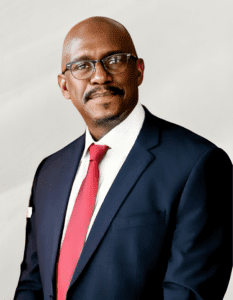 “For too long, the private sector has been viewed as a bystander in the NCD crisis,” said Dr. Patrick Antoine, CEO and Technical Director of the CPSO. “We are making it clear that we are active partners in this fight. This Framework is yet another down payment to ensure that this unfortunate perception ends today. The Framework is a decisive step toward demonstrating our commitment and ensuring that our contributions are visible, measurable, and impactful.”
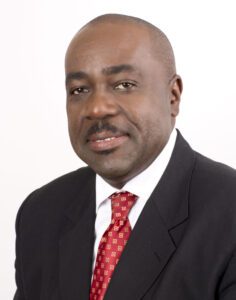 Honourable E.P. Chet Greene, Minister of Foreign Affairs, Trade and Barbuda Affairs of Antigua and Barbuda, highlighted the findings of the CPSO Study, “Africa Union-CARICOM Trade in Goods: Scope and Potential”, at the opening of the AfriCaribbean Private Sector Webinar Series, “Unlocking AfriCaribbean Trade and Investment: Opportunities, Ecosystems and Private Sector Leadership” on Tuesday, 20th January, 2026.