CASTRIES, Saint Lucia — July 9, 2026. The second High-Level Breakfast Dialogue between the OECS Business Council (OBC), the CARICOM Private Sector Organization (CPSO) and CARICOM Heads of Government was convened at Sandals Grande, Saint Lucia, under the theme “Meeting the Affordability Challenge: Toward a Proactive Agenda for Member States and the Private Sector” on July 6th 2026, in the margins of the 51st Regular Meeting of the Conference of Head of Government of the Caribbean Community.
The Dialogue brought together more than one hundred and twenty senior representatives of the CARICOM private sector with Heads of Government from eleven (13) Member States, the Caribbean Congress of Labour (CCL), development finance partners—including the Inter-American Development Bank (IDB), the Caribbean Development Bank (CDB) and the CARICOM Development Fund (CDF)—and other regional institutions.
Against the backdrop of rising cost-of-living pressures across the Community, participants examined practical measures to improve affordability by removing barriers to intra-regional trade, reducing transportation and logistics costs, diversifying imports, mobilising regional investment capital, strengthening tourism linkages, and addressing the disproportionate negative impacts (DNI) of the International Maritime Organization’s Net-Zero Framework (NZF) on CARICOM Small Island Developing States (SIDS).
The discussions reflected a strong consensus that regional governments, the private sector and organised labour must move beyond policy dialogue to coordinated implementation, supported by clearly defined mandates, timelines and measurable outcomes.
Key Outcomes and Takeaways
Regional Travel and Maritime Transport: Dominating the morning’s discussions was the urgent need to resolve the Region’s inadequate transport capacity, which continues to constrain the CSME commitment to the free movement of people and goods. The Session agreed on a September 2026 deadline for creation of the enabling regulatory framework for the mutual recognition of insurance, licences and road taxes, essential to finalising arrangements for the regional ferry service to be operated by the private sector. In the interim, Heads determined that an earlier pilot ferry initiative will be pursued, utilising a vessel the Government of Trinidad and Tobago has expressed its willingness to deploy to launch the service. The Session also registered satisfaction at the commencement of service by Executive Air Cargo, which has begun transporting agri-food products among Member States.
Non-Tariff Barriers: Turning to the barriers within the Region’s own control, the Session adopted a ‘pairwise’ model of direct engagement between the Member States implementing the fifty-seven (57) non-tariff barriers (NTBs) identified by the private sector as suppressing intra-regional trade, and the Member States affected by them. The model will be implemented under the leadership of a Lead Head of Government, with the active participation of the private sector and the relevant ministerial and regulatory institutions, and with implementing and affected States committing to time-bound remedial actions.
Import diversification: The Breakfast Meeting benefitted from a presentation of technical work on reducing the cost and increasing the benefits, of diversifying and de-risking CARICOM’s imports. It noted that the Region stands to realise expected savings of circa USD 2.0 billion from the diversification of a component of its non-fuel imports alone and recognised the scope for still greater savings from reduced fuel imports as the Region transitions to renewables. The CPSO was urged to undertake further work on the fuel import-energy transition nexus, as a matter of immediate priority.
Short-Term Cost-of-Living Measures: The Session discussed short-term measures to ease the cost-of-living pressures bearing on CARICOM households. Prime Minister Mottley made an explicit call for a formal tripartite compact among Governments, the private sector and organised labour, covering a basket of essential products. She also called on the private sector to accept lower profits on essential goods to ease the cost of living for CARICOM citizens. The need for further discussions with the contribution of ideas from all quarters was recognized.
Mobilising regional savings: The Session then turned from costs to capital, endorsing the urgency of creating a bridge between the surplus liquidity held by regional financial institutions and strategic investment opportunities in areas such as desalination, battery storage, solar, wind and geothermal power generation, and port facilities. Recognising that the people of CARICOM remain largely unaware of these opportunities, the Session endorsed their publication on a common regional platform as a necessary first step. Investment opportunities in agriculture were singled out for listing on the platform, and a request was made for a compendium of CARICOM-wide agricultural investments to be presented at the next High-Level Breakfast Forum.
Tourism linkages: In the same spirit of building regional value chains, the Session renewed its support for completing the Tourism Linkages Project — mandated by the Forty-Eighth Regular Meeting of the Conference of Heads of Government — to strengthen the connections between tourism and regional agriculture, manufacturing and services.
Climate action and the IMO Net-Zero Framework: Closing the substantive agenda, the regional private sector reaffirmed its commitment to climate action, decarbonisation and the reduction of greenhouse gas (GHG) emissions as essential to the sustainable development of CARICOM Member States. At the same time, the Session expressed broad support for a cautious regional approach to implementation of the IMO Net-Zero Framework (which aims to impose penalties on shipping failing to convert fleets to net-zero carbon-emitting fuels), citing its disproportionate negative impacts on Small Island Developing States, consumers and the tourism industry—particularly the cruise sector. Participants also endorsed extending the CPSO’s import-diversification work to quantify the import savings and wider economic benefits associated with the transition to renewable energy, with an update to be presented to the next Meeting of the Council for Finance and Planning (COFAP).
Implementation: To carry the agenda forward, the Session agreed to establish Working Groups operating with predefined timelines and measurable deliverables, ensuring that the commitments arising from the Session are implemented and monitored for accountability. CPSO will work closely with the CSME Prime Ministerial Sub Committee to follow up on this structure.
Shared On-going Commitment: Shared Ongoing Commitment: The Session concluded with a shared determination that the Caribbean’s affordability challenge must be addressed through practical, time-bound and results-oriented action, and that the enduring partnership among governments, the private sector and organised labour will remain central to delivering meaningful benefits for the people of the Community. In closing, CPSO Chairman Gervase Warner thanked the Heads of Government and private sector representatives for their honest engagement and collaborative contributions, observing that the stage has been set for continuing collaboration among the private sector, Heads of Government and organised labour. He committed the CPSO to following up on delivery of the work programme identified during the Session.
— END —
Notes to Editors:
The CARICOM Private Sector Organization (CPSO) is an Associate Institution of the Caribbean Community (CARICOM), representing the regional private sector in advancing the CARICOM Single Market and Economy (CSME).
The OECS Business Council (OBC) is the representative body of the private sector of the Organisation of Eastern Caribbean States.
The First High-Level Breakfast Dialogue was convened in July 2025 in the margins of the 49th Regular Meeting of the Conference of Heads of Government of the Caribbean Community (CARICOM).

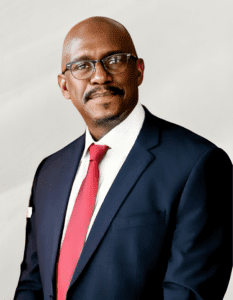 “For too long, the private sector has been viewed as a bystander in the NCD crisis,” said Dr. Patrick Antoine, CEO and Technical Director of the CPSO. “We are making it clear that we are active partners in this fight. This Framework is yet another down payment to ensure that this unfortunate perception ends today. The Framework is a decisive step toward demonstrating our commitment and ensuring that our contributions are visible, measurable, and impactful.”